2025 Regenerative Tree Planting - Atmos Arborist Alliance
A Collaborative Learning Site
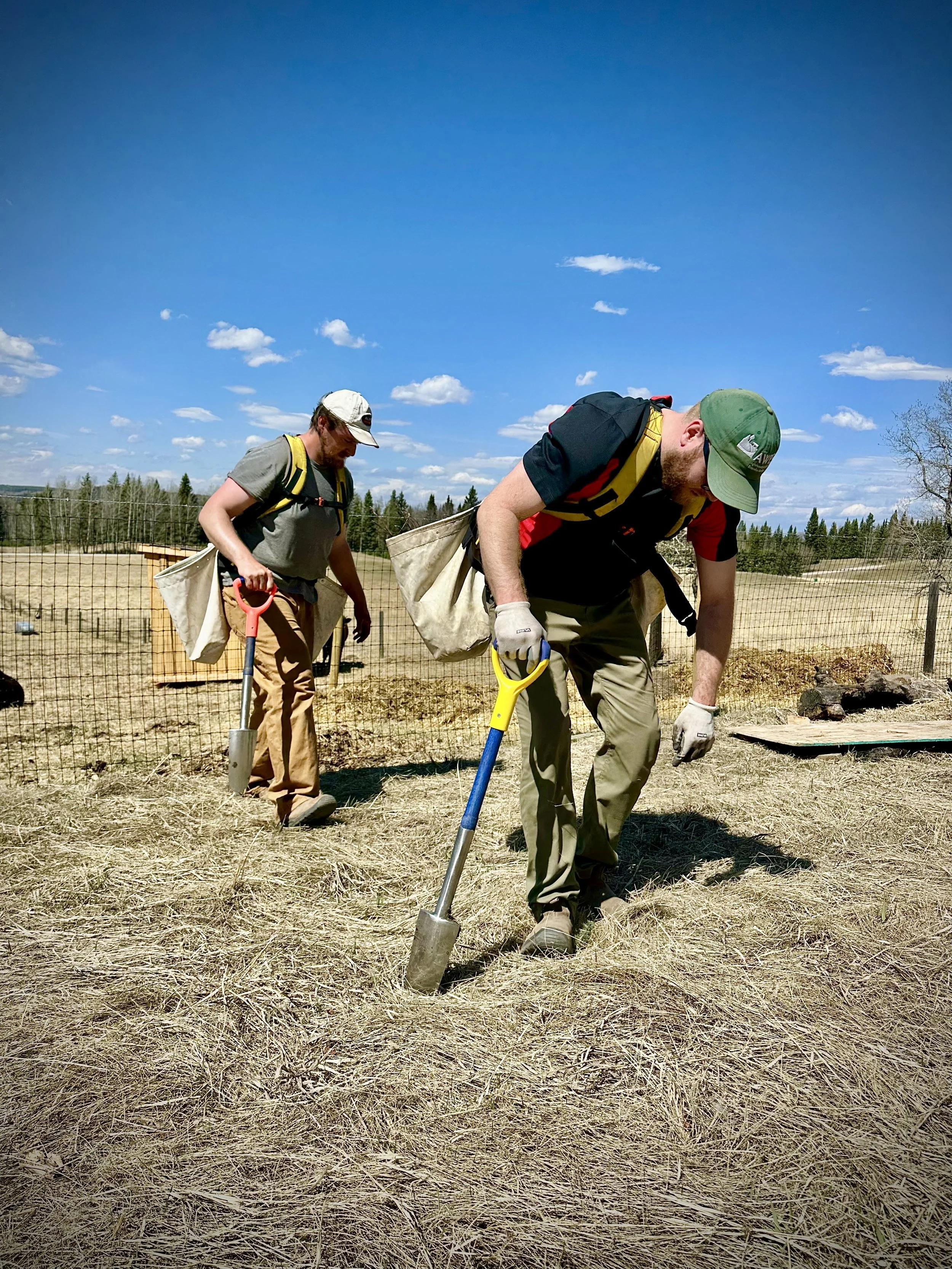
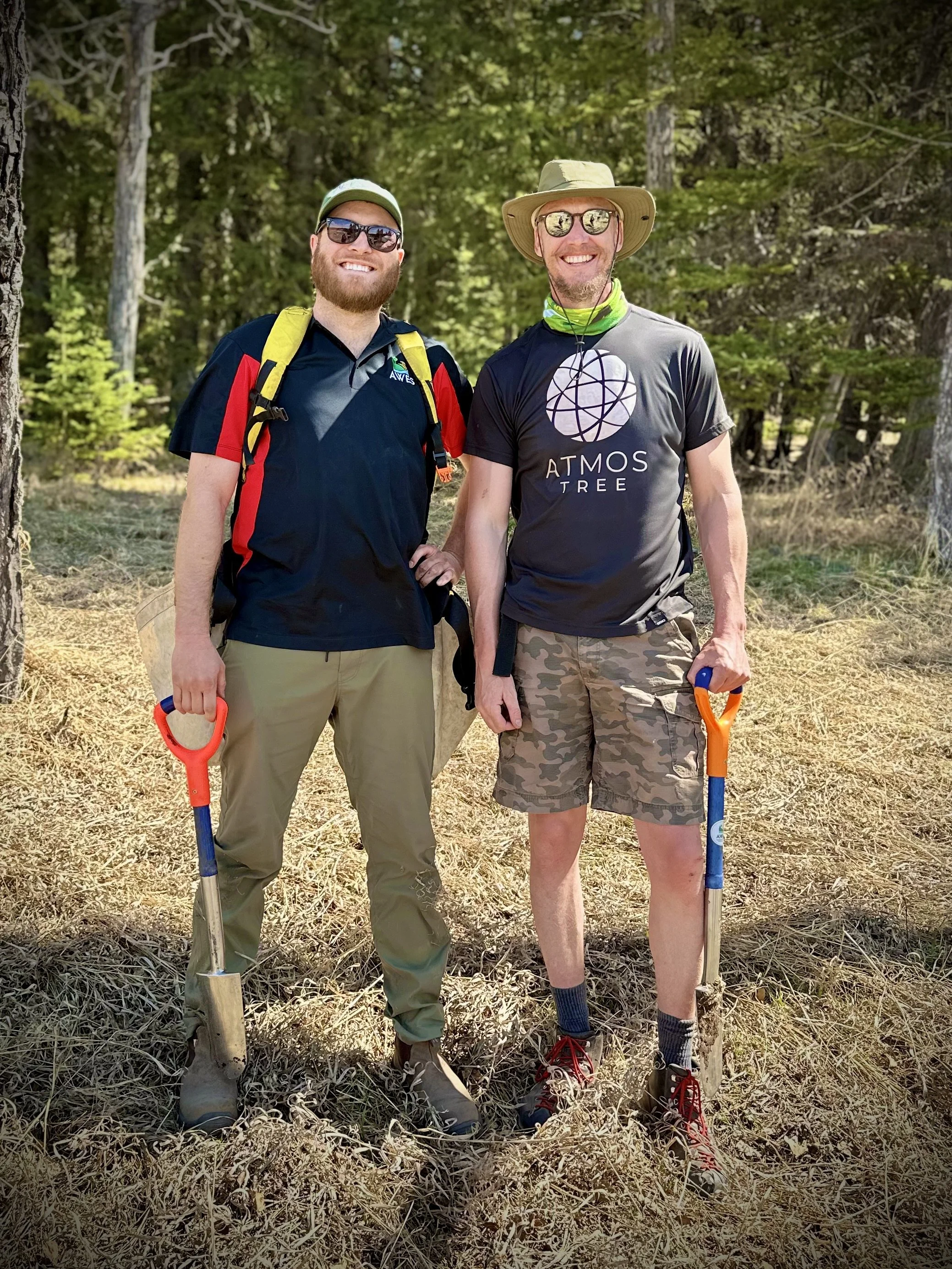
On May 3rd, 2025, Atmos Tree led a collaborative tree-planting and land stewardship event at Serendipity Springs Farm, a regenerative property near Water Valley, Alberta. In partnership with local and provincial organizations, the day focused on restoration, education, and experimentation — planting a total of 1,656 trees and native plants in support of long-term ecological resilience.
This planting was funded through the Atmos Tree Alliance’s 2:1 tREeCYCLE™ program, where arborist-funded recycling fees are directed toward off-site tree planting and land regeneration.
A Multi-Partner Effort in Regenerative Stewardship
This project brought together several aligned organizations, each contributing distinct expertise:
Atmos Tree – project lead and funding coordinator through the 2:1 tREeCYCLE™ program
Agroforestry and Woodlot Extension Society of Alberta (AWES) – planning support, on-site coordination, and planting assistance
Wright Nursery – locally collected, seed-grown native bare-root stock
Serendipity Springs Farm – host site and long-term land steward
Together, the group delivered a planting that balanced proven agroforestry methods with experimental approaches designed to inform future restoration work.
Planting Volume and Species Mix
The majority of trees planted were supplied through AWES and installed using established agroforestry and eco-buffer principles. These included:
540 White Spruce
540 Black Spruce
180 Sandbar Willow
180 Saskatoon
180 Red Osier Dogwood
In addition, Wright Nursery supplied 36 locally adapted native shrubs and groundcover plants, including alder, elderberry, hazelnut, currant, raspberry, bearberry, and wild strawberry.
Total planted: 1,656 trees and native plants
Two Planting Strategies, One Learning Landscape
Rather than treating the site as a single-method installation, Atmos Tree intentionally used two different planting approaches.
Eco-Buffer Planting (AWES Stock)
Much of the AWES-supplied stock was planted using more conventional spacing and layout methods, creating eco-buffers intended to:
Stabilize soils
Improve moisture retention
Support wildlife movement
Integrate with agricultural land use
These plantings represent reliable, well-understood restoration techniques.
Dense, Diverse Grove (Miyawaki-Inspired Trial)
A smaller portion of the site was planted as a dense, highly diverse grove, using:
All Wright Nursery stock
Select AWES species
Tighter spacing and layered diversity
Inspired by Miyawaki-style afforestation principles, this grove is expected to establish more quickly and develop complex plant interactions earlier than conventional plantings. The intent is not prescription, but observation — monitoring survival, growth rates, and ecological response over time.
Education, Community, and Knowledge Sharing
The day also featured short talks and informal demonstrations, including a planting overview by Atmos Tree founder Kurt Stenberg, alongside discussions on native plants, regenerative farming, and land stewardship.
Participants were encouraged to engage at their own pace — planting, learning, or simply enjoying the farm and conversations.
Local Access, Broader Perspective
This planting represents Atmos Tree’s second locally accessible project, allowing for ongoing observation and hands-on learning as the alliance grows. These local sites play a critical role in refining methods and improving accountability.
At the same time, Atmos Tree recognizes that some of the greatest ecological impact occurs beyond local borders. Future plantings will continue to balance local learning sites with regional and international projects where trees may grow faster or provide greater environmental and social benefit.
Looking Forward
This planting is one step in an ongoing process — testing ideas, building partnerships, and improving how trees are planted through transparent, arborist-led funding.
Atmos Tree extends sincere thanks to AWES, Wright Nursery, Serendipity Springs Farm, and all participants who contributed their time, knowledge, and support.
More collaborations — and more learning sites — are ahead.